Bench asks Delhi authorities to explain legal basis for male-female vacancy split, accommodation of transgender candidates, and age relaxation issues
The Supreme Court on October 16, 2026, issued notice in a petition raising concerns over the non-inclusion of third gender candidates in vacancy notifications issued for public employment in Delhi, particularly by the Delhi Subordinate Services Selection Board (DSSSB) for teaching posts.
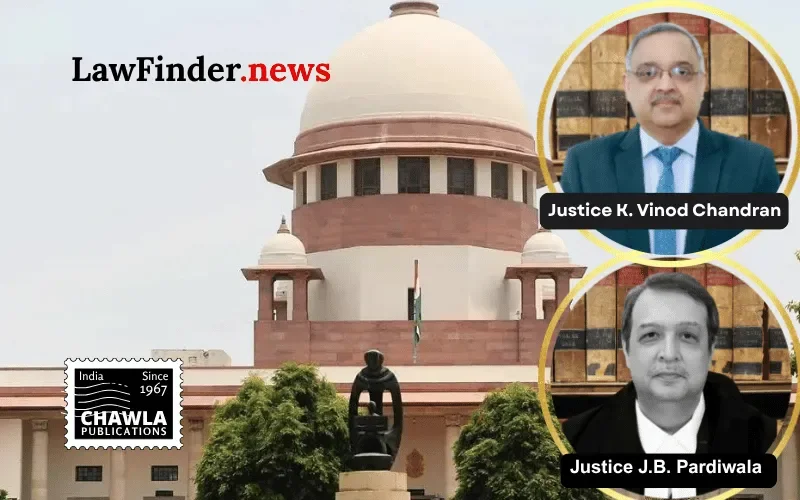
A Bench of Justice J.B. Pardiwala and Justice K. Vinod Chandran took up the matter in Jane Kaushik v. Lieutenant Governor, NCT of Delhi and Ors. and framed a series of pointed questions for the respondents to answer through an affidavit within 15 days.
The Court said the core issue before it was the exclusion of third gender persons from vacancy notifications issued by the State. To address this, the Bench sought clarity on which recruitment rules govern DSSSB vacancy notifications, including whether those rules are rooted in any constitutional provision, statutory enactment, or State service rules. The Court also asked where the DSSSB derives its power to issue notifications for teaching posts in specific subjects.
A major focus of the hearing was the practice of notifying vacancies separately for male and female candidates. The Bench asked whether any recruitment rules, statutory provisions, or service rules actually require such gender-wise classification. If not, the Court sought an explanation for the basis and objective behind bifurcating vacancies between men and women in public recruitment notifications.
The Supreme Court further asked the respondents to clarify whether they propose to include third gender candidates in future vacancy notifications issued through DSSSB and, if so, how transgender persons would be accommodated in public employment.
In a connected matter involving petitioner Praveen Singh, the Court also raised the issue of age relaxation for transgender persons. It specifically questioned why the Delhi High Court had not exercised its power under Rule 12 of the Delhi High Court Establishment (Appointment and Conditions of Service) Rules, 1972, to grant age relaxation, especially in light of the socio-economic discrimination faced by transgender persons.
Procedurally, the Court condoned the delay in the connected diary matter, issued notice returnable on November 19, 2026, and recorded that counsel for respondent nos. 2 and 3 had accepted notice on caveat, dispensing with formal service on them. Notice is to be issued to the remaining respondents, and dasti service has also been permitted.
The Bench directed the respondents to file their affidavit within 15 days and said the same must be shared with the petitioners, who may then file their response before the next hearing. The Court also indicated that both sides should be ready with legal arguments on the next date of hearing.
The matter will now be heard again on November 19, 2026. The order signals the Supreme Court’s close scrutiny of whether existing public recruitment systems adequately recognize and accommodate transgender persons, especially in the context of equal access to government employment.
Statutory provision(s): Rule 12 of the Delhi High Court Establishment (Appointment and Conditions of Service) Rules, 1972
Jane Kaushik v. Lieutenant Governor, NCT of Delhi, (SC) : Law Finder Doc id # 2999876