Court issues notice in contempt plea, asks Union to clarify whether 2026 compensation scheme covers uninsured vehicles and to publish it in the Official Gazette
The Supreme Court has pulled up the Union government over alleged non-compliance with its earlier directions on road safety reporting and implementation of interim compensation for motor accident victims, while asking the Centre to clarify whether its newly framed “Compensation to Victims (Interim Relief) Scheme, 2026” applies to accidents involving uninsured vehicles.
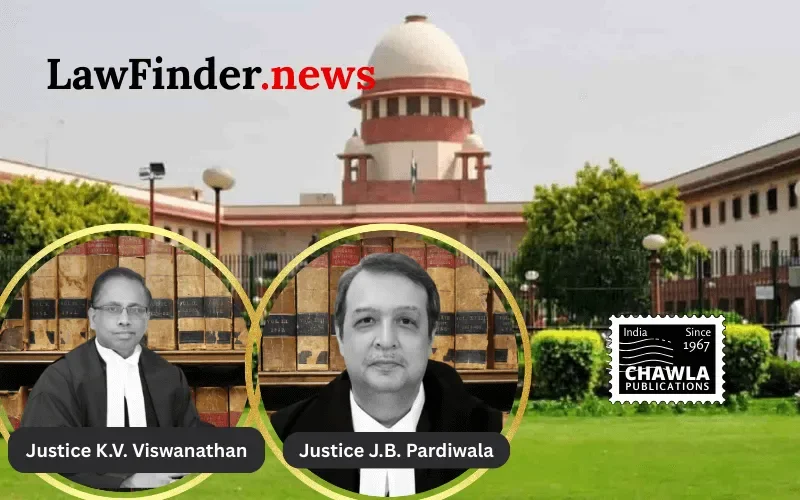
A Bench of Justice J.B. Pardiwala and Justice K.V. Viswanathan was hearing contempt petitions in the long-pending road safety matter, S. Rajaseekaran v. Union of India. In one of the petitions, the Court noted allegations that the Ministry of Road Transport and Highways (MoRTH) had failed to comply with an April 17, 2025 order directing publication of the annual report on road accidents for 2023 by the end of August 2025, and requiring such reports to be published within six months of the end of every calendar year thereafter.
Taking serious note of the alleged delay, the Bench issued notice to the Union and directed it to explain why the earlier order had not been complied with and what steps it proposes to take. The matter has been made returnable on November 25, 2026.
In the second contempt petition, the Court examined compliance with its April 28, 2025 direction requiring the Central Government to frame a scheme under Section 164A of the Motor Vehicles Act, 1988 for grant of interim relief to compensation claimants. The Centre informed the Court that it had framed the “Compensation to Victims (Interim Relief) Scheme, 2026”.
The Bench recorded the contents of Clause 6 of the scheme, which lays down the procedure for claimants to seek interim compensation through a designated electronic portal. The process involves transmission of applications to the Department of Financial Services, the investigating officer, and the insurer of the vehicle involved. The scheme also provides timelines for insurers to accept or reject claims and for payment to be made before the Claims Tribunal.
However, concerns were raised by amicus curiae Gaurav Agrawal and the applicant appearing in person that the scheme appears to be limited to insured vehicles, since the interim compensation mechanism is routed through the insurer. They pointed out that the scheme does not clearly address claims arising from accidents involving uninsured vehicles, where recovery may have to be made from the owner or driver.
The Court found this concern significant and asked Additional Solicitor General Vikramjit Banerjee to obtain instructions on whether the scheme would also include non-insured vehicles. The Bench said the issue required clarification because Section 164A contemplates a broader interim relief framework.
The Court also stressed that the compensation scheme, being a beneficial measure, would serve its purpose only if the public is made aware of it. It observed that ordinary citizens would not know of their right to seek interim relief unless the scheme is adequately publicised. Accordingly, the Bench directed the Union government to give wide publicity to the “Compensation to Victims (Interim Relief) Scheme, 2026”.
Further, the Court held that the scheme is a statutory scheme framed under Section 164A of the Motor Vehicles Act and therefore falls within the framework of Section 212 of the Act. Referring to Section 2(38-A), which defines “scheme”, the Bench said such a scheme must be published in the Official Gazette. It directed the Union to ensure publication of the scheme in the Official Gazette at the earliest and to place before the Court, by the next hearing, a clear plan on how it proposes to operationalise it.
The Bench also took note of broader suggestions made by the applicant for improving the motor accident compensation system. These included district-wise collection and quarterly publication of data on claims pending before Motor Accident Claims Tribunals, appeals pending in High Courts, recovery proceedings, and unsatisfied awards. The suggestions also called for identification of bottlenecks and strengthening of tribunal infrastructure, particularly in states facing severe delays. The Court directed the Union to examine these suggestions and revert by the next date of hearing.
The contempt petitions, interlocutory applications, and the main writ petition will now be heard together on November 25, 2026, at 2 pm before the same Bench.
Bottom Line:
Supreme Court took note of non-compliance of earlier directions regarding publication of annual road accident reports and framing/implementation of interim relief scheme under Section 164A - Notice issued in contempt petition - Union directed to clarify applicability of Compensation to Victims (Interim Relief) Scheme, 2026 to uninsured vehicles, give wide publicity to scheme, publish it in Official Gazette and indicate steps for making it operational.
Statutory provision(s): Section 164A, Section 212, Section 2(38-A), Section 149(3)(a), Section 164, Section 168, Section 166, Section 173 of the Motor Vehicles Act, 1988; Clause 12 of Annexure XIII of the Central Motor Vehicles Rules, 1989
Rajaseekaran v. Union of India, (SC) : Law Finder Doc id # 2999875