Court holds writ petition maintainable for undisputed contractual payments, says paucity of funds is no defence for withholding admitted dues
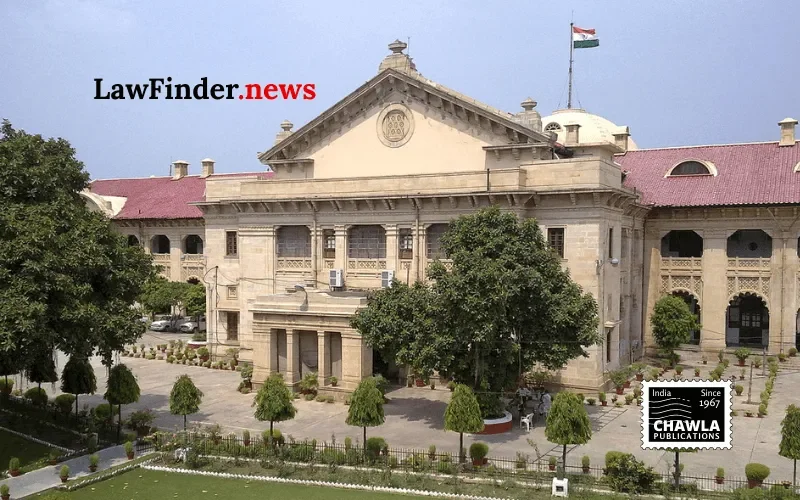
The Allahabad High Court has directed Firozabad Dugdha Utpadak Sahkari Sangh Limited, a state-controlled milk cooperative in Uttar Pradesh, to pay Rs. 18,79,197 to M/s Purv Sainik Security Service along with 6% annual interest, holding that admitted contractual dues cannot be withheld on the plea of financial hardship.
A Division Bench of Justice Prakash Padia and Justice Indrajeet Shukla passed the order on October 13, 2026, in M/s Purv Sainik Security Service v. State of U.P. and Others.
The petitioner, a registered partnership firm, had provided security manpower to the respondent cooperative from October 1, 2018 to May 31, 2021 under a tender awarded through the state e-procurement system. According to the firm, while payments were made from time to time, a substantial amount remained unpaid even after the contract ended and a new agency took over.
The firm approached the High Court seeking a mandamus for payment of Rs. 18,59,197.02 as outstanding contractual dues and return of a Rs. 20,000 security deposit.
At the outset, the respondents objected to the writ petition, arguing that the dispute arose out of a contract and therefore should not be entertained under Article 226 of the Constitution. The court, however, undertook a detailed examination of the law on maintainability and entertainability of writ petitions involving contractual claims.
The Bench clarified that “maintainability” and “entertainability” are distinct concepts. It said a writ petition is maintainable if the High Court has jurisdiction, while entertainability depends on judicial discretion. Merely because an alternative remedy such as a civil suit or arbitration may exist does not make a writ petition non-maintainable.
Relying on Supreme Court precedents including ABL International Ltd. v. Export Credit Guarantee Corporation of India Ltd., Godrej Sara Lee Ltd. v. Excise and Taxation Officer-cum-Assessing Authority, and M/s Utkal Highways Engineer and Contractors v. Chief General Manager, the court reiterated that writ jurisdiction can be exercised in contractual matters where the liability is admitted and no disputed question of fact requiring oral evidence arises.
In this case, the court found that the respondents had unequivocally admitted the outstanding liability. In its counter-affidavit, respondent no. 5 expressly stated that the petitioner had supplied the security workforce and that Rs. 18,59,197.02 remained payable. It further admitted that the payment had not been made due to “financial difficulties and lack of money.”
The court also noted that during the hearing, fresh written instructions dated August 13, 2026 were produced, again acknowledging the outstanding dues as well as the Rs. 20,000 fixed deposit receipt. On that basis, the total admitted liability was found to be Rs. 18,79,197.
Rejecting the defence of financial constraints, the Bench held that state instrumentalities cannot deny payment of admitted dues after availing services. It observed that paucity of funds, administrative difficulties, or internal financial problems are not legally sustainable grounds to withhold payment once liability has crystallised.
The court further said that allowing such a defence would amount to permitting the State or its instrumentalities to unjustly enrich themselves at the expense of contractors who had already performed their obligations.
Emphasising that the petitioner’s dues had remained unpaid for nearly five years, the Bench directed respondent no. 5 to clear the entire amount within a maximum period of three months. It also ordered that interest at 6% per annum would continue to accrue until actual payment.
The ruling is significant for contractors and service providers dealing with government bodies, as it reaffirms that while disputed contractual money claims usually belong before civil courts or arbitral forums, admitted dues can be enforced through a writ petition where no detailed factual inquiry is needed.
The writ petition was accordingly allowed, with no order as to costs.
Bottom Line:
Contractual dues - Writ petition under Article 226 for payment of admitted contractual dues is maintainable and entertainable where liability is unequivocally admitted and no disputed question of fact requiring oral evidence arises - State or its instrumentality cannot withhold admitted dues on ground of paucity of funds, financial constraints or administrative difficulties - Respondent directed to pay admitted dues with interest at 6% per annum.
Statutory provision(s): Constitution of India, Articles 226, 12, 14 21; U.P. Co-operative Societies Act, 1965, Sections 2(a-4), 2(d-1); Code of Civil Procedure, 1908, Order 37, Section 9.
M/s Purv Sainik Security Service v. State of U.P., (Allahabad)(DB) : Law Finder Doc id # 2995927