Court notes consensual relationship and family disagreement as key factors; directs petitioners to cooperate with investigation and comply with bail conditions
In a significant judgment dated October 23, 2026, the Jammu & Kashmir and Ladakh High Court granted anticipatory bail to Ikram Tahir and his mother in a case registered under the Bharatiya Nyaya Sanhita, 2023, involving allegations of sexual exploitation on the false promise of marriage. The Court reiterated the principle that bail is the rule and jail is the exception, particularly emphasizing the protection of personal liberty under Article 21 of the Constitution.
The case arose from a complaint lodged by Haleema Kouser, who alleged that petitioner Ikram Tahir exploited her physically under the promise of marriage after a relationship lasting about one and a half years. She claimed that despite assurances, the petitioner avoided her once her family proposed marriage to another person, leading to an FIR registered at Police Station Mandi under Sections 49, 64, and 69 of the Bharatiya Nyaya Sanhita, 2023.
During the investigation, it emerged that the relationship between the complainant and petitioner was consensual and that the proposed marriage did not materialize due to family objections. The Sessions Court, Poonch had earlier rejected the anticipatory bail application, prompting the petitioners to approach the High Court.
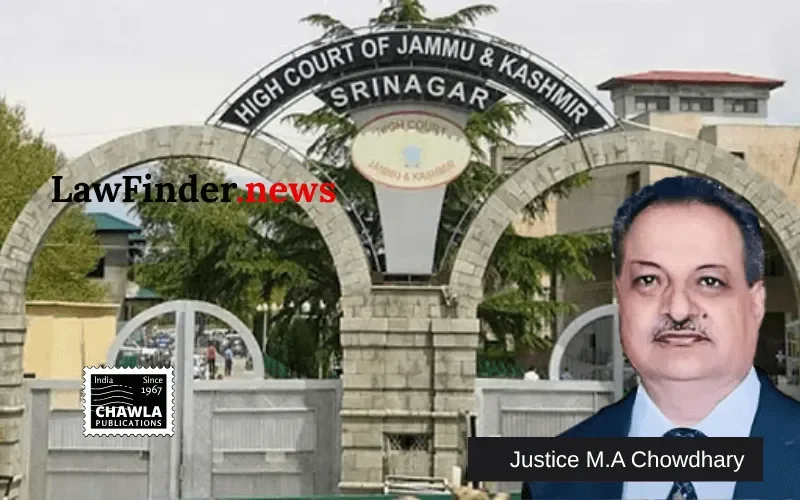
Justice M.A. Chowdhary, after detailed consideration of the facts and judicial precedents, including the Supreme Court judgments in Gurbaksh Singh Sibbia v. State of Punjab (1980), Bhadresh Bipinbhai Sheth v. State of Gujarat (2016), and Gautam Navlakha v. National Investigation Agency (2021), observed that the petitioners were entitled to anticipatory bail. The Court highlighted the absence of conclusive proof of the offences during investigation and noted the complainant's own admission of a consensual relationship.
The Court imposed conditions on the petitioners, including furnishing personal and surety bonds of Rs. 50,000 each, cooperating fully with the investigation, not leaving the Union Territory of Jammu & Kashmir without permission, and refraining from tampering with evidence. The order underscores the judiciary's commitment to safeguarding individual liberty while ensuring due process in criminal cases.
This judgment is instructive on the application of anticipatory bail provisions under the newly enacted Bharatiya Nyaya Sanhita, 2023, and reflects a balanced approach in cases involving complex personal relationships and serious allegations.
Bottom Line:
Anticipatory bail - Allegation of sexual exploitation on false promise of marriage - Where material indicated a consensual relationship and failure of relationship to culminate into marriage because families did not agree, petitioners were held entitled to anticipatory bail - Reiterated that bail is the rule and jail is the exception.
Statutory provision(s):
Bharatiya Nyaya Sanhita, 2023 Sections 49, 64, 69; Bharatiya Nagarik Suraksha Sanhita, 2023 Section 482
Ikram Tahir v. Union Territory of Jammu & Kashmir, (J&K) : Law Finder Doc Id # 3001715