Court says daughters of late Kali Charan cannot personally perform pooja sewa at this stage, but are entitled to their share in temple offerings; 4/6th share to be kept with Registrar General
New Delhi, Sept. 22, 2026: The Delhi High Court has passed an interim order in the long-running dispute concerning baridari rights at Kalkaji Mandir, holding that while the female legal heirs of late Kali Charan cannot personally perform pooja sewa at the temple for the time being, they remain entitled to the benefits arising from the offerings made during the relevant bari period.
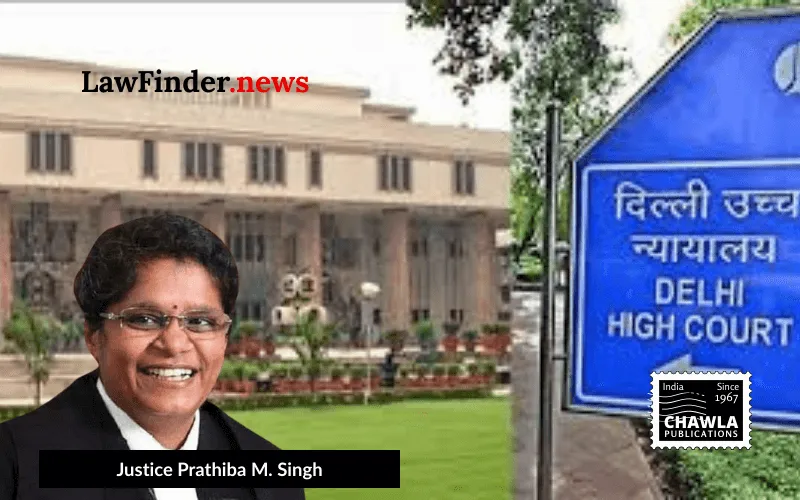
Justice Prathiba M. Singh was hearing an application under Order XXXIX Rules 1 and 2 of the Code of Civil Procedure in a suit that had earlier been transferred from FAO 36/2021 following directions of the Supreme Court in a connected matter.
The applicants before the High Court claimed to be the legal heirs and rightful baridars of late Kali Charan. The court noted that the central issue in the suit was whether the female heirs of late Kali Charan had rights to perform pooja sewa at Kalkaji Mandir. After considering earlier orders passed in 2021 and 2022, the court recorded the consent of the parties that, for the present, the female legal heirs would not themselves conduct pooja sewa, but would be entitled to the benefits of the rights attached to the offerings at the temple.
In line with the practice followed in earlier baris, the court permitted the four applicants to carry out the pooja sewa by appointing male representatives from within their own family. The court further directed that the offerings and donations collected during the bari period be divided in the following manner: one-sixth share each to the plaintiff Kamlesh Sharma and the legal heirs of Ajay Sharma, while the remaining four-sixths share belonging to the daughters of late Kali Charan — Prem Lata, Shanti Devi, Kapoori Devi and Pushplata — shall be deposited with the Registrar General of the High Court.
The court also ordered that the persons appointed by any of the parties to conduct pooja sewa must not cause any disturbance to other family members performing the sewa. The arrangement has been made applicable for the bari commencing from September 21, 2026 and ending on October 20, 2026.
As a result of the interim arrangement, the court disposed of CM Application 40354/2026. A connected application, I.A. 26230/2026, was also disposed of as infructuous.
Bottom Line :
Kalkaji Mandir baridari dispute - At interim stage, female legal heirs though not permitted to personally perform pooja sewa, are entitled to benefits arising from offerings and may appoint male representatives from within family to conduct pooja sewa - Offerings to be divided by granting 1/6th share each to plaintiff and legal heirs of Ajay Sharma, while remaining 4/6th share of daughters of late Kali Charan to be deposited with Registrar General.
Statutory provision(s): Code of Civil Procedure, 1908 Order XXXIX Rules 1 and 2
Kamlesh Sharma v. Neeta Bhardwaj, (Delhi) : Law Finder Doc id # 2984397