Supreme Court shields disputed highway structures from demolition, sends ownership and encroachment claims to High Courts. Clarifying its earlier road-safety directions, the Court says NHAI must follow statutory procedure before removing alleged encroachments on National Highways.
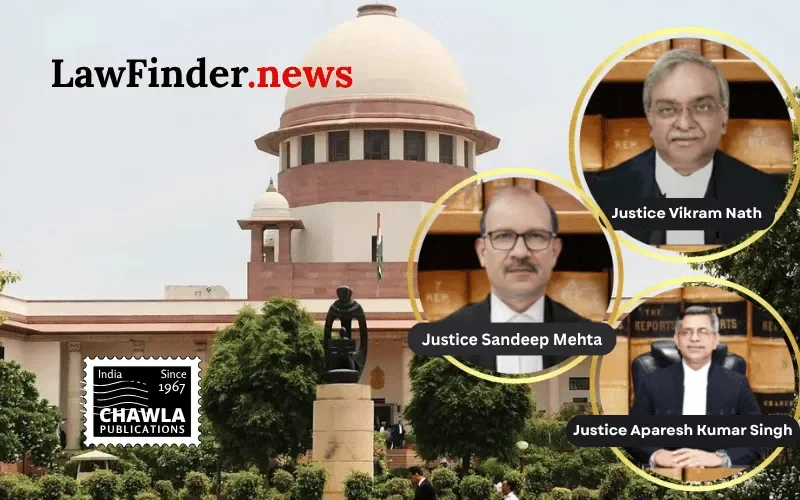
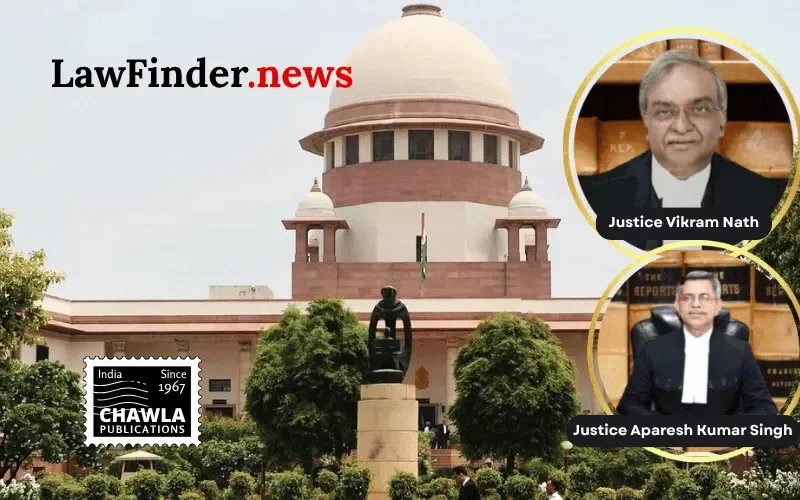
The Supreme Court on November 18, 2026, clarified that its earlier directions aimed at removing unauthorized encroachments from National Highways cannot be used to bypass statutory safeguards or decide disputed ownership claims. A bench of Justices Vikram Nath and Aparesh Kumar Singh disposed of a large batch of interlocutory applications arising out of the Phalodi accident suo motu proceedings, while granting interim protection against demolition in several cases.
The Court was hearing petitions filed by landowners, businesses and property occupants from Gujarat and other States who claimed that National Highways Authority of India (NHAI) and other authorities had issued notices or initiated demolition action against structures situated on privately owned land. The applicants argued that their properties were being treated as encroachments without proper demarcation of the Right of Way, without adequate hearing, and without compliance with the Control of National Highways (Land and Traffic) Act, 2002.
The bench made it clear that its order dated April 13, 2026, which called for removal of encroachments in the interest of road safety, was never intended to amount to a conclusive finding that any particular structure was an unauthorized encroachment. The Court stressed that a general direction to remove illegal structures does not dispense with the legal requirement of first determining whether a disputed property actually falls within highway land.
Referring to Section 26 of the 2002 Act, the Court noted that the law provides a structured mechanism for removal of unauthorized occupation, including notice, opportunity to respond, and consideration of the affected person’s representation. The Court also relied on its earlier ruling in Gyan Prakash v. Union of India, where compliance with statutory procedure and principles of natural justice was emphasized.
The Supreme Court observed that many of the applications raised factual disputes involving ownership documents, acquisition records, survey reports, and demarcation of the Right of Way—issues that are better examined by the jurisdictional High Courts. It said the High Courts are the appropriate forums to determine whether the authorities have followed the correct procedure and whether the disputed structures are in fact encroachments.
Accordingly, the Court granted liberty to the applicants to approach the concerned High Courts, or continue their pending cases there. It also ordered that interim protection already granted shall continue until the High Courts decide the matters. In cases where no interim protection had previously been granted, the Court directed NHAI and other authorities not to carry out demolition, removal, or other coercive action against the disputed structures until the High Court proceedings are concluded.
At the same time, the Court cautioned that the protection would apply only to the structures that are the subject matter of the applications and would not create any equity in favour of the applicants or permit fresh construction or encroachment. The larger directions issued on April 13, 2026, remain in force, but must be implemented in accordance with law and the rights of affected persons.
The order provides important clarity in the ongoing highway safety drive: while unauthorized encroachments on National Highways can be removed, authorities must strictly follow the statutory process, and disputed cases must be adjudicated by the High Courts before demolition can proceed.
Statutory provision(s): Control of National Highways (Land and Traffic) Act, 2002, Section 26(2) to Section 26(6), Section 26(7), Section 26(8)
In Re: Phalodi Accident v. National Highways Authority of India, (SC) : Law Finder Doc id # 3162377