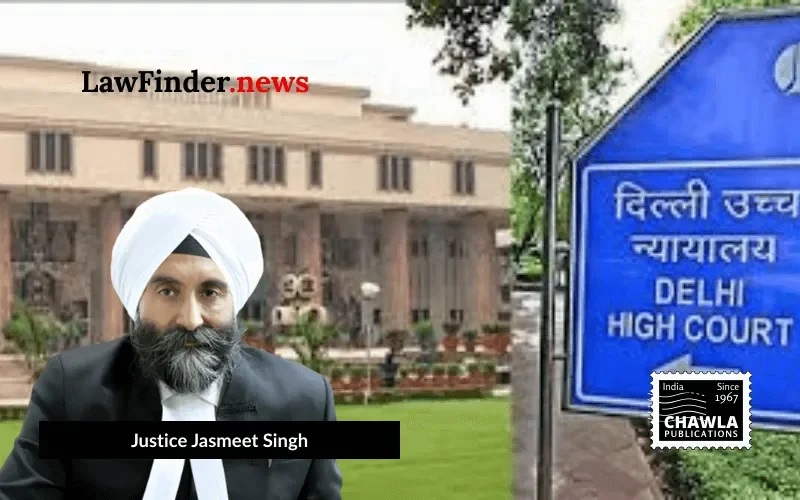
Court says green public park cannot be used for religious event when alternative arrangements are available and administrative notices cannot override judicial orders
The Delhi High Court has declined permission for holding Chhath Puja at Chintoo Park in Naraina Village, ruling that a public green area cannot be opened for religious observance if doing so would harm its maintenance and when other venues are already available.
Justice Jasmeet Singh passed the order on 13 November 2026 in Lalit Anand v. Govt. of NCT of Delhi and Ors., dismissing an application filed under Section 151 of the Civil Procedure Code, 1908. The applicant had sought permission to organise Chhath Puja, including Sandhya Arghya on 15 November 2026 and Usha Arghya on 16 November 2026, over about 1,000 square metres of Chintoo Park, Naraina Village.
The petitioner argued that the event had been organised at the same location for the past 23 years and assured the court that the park would be restored to its original condition after the festivities. The plea also asked for temporary booking of the site and directions to authorities to process necessary no-objection certificates and permissions.
The Delhi Development Authority opposed the request, telling the court that Chintoo Park is being maintained as a green area for public benefit. It submitted that trees and flowers have been planted there and that allowing a religious gathering in the park would adversely affect the space and its upkeep.
Accepting the DDA’s objection, the High Court held that the fact that the applicant had been conducting the event there for several years was not, by itself, a valid reason to permit continued use of the park. The court observed that the park is presently maintained as a green area for the public at large and that such spaces deserve protection.
During the hearing, the applicant also relied on a document titled “Chhath Puja 2026: Single Window Management, Central District.” However, the court made it clear that such an administrative document could not supersede directions already issued by the court on 19 August 2026. Reaffirming the supremacy of judicial orders over executive decisions, the court cited the Supreme Court’s ruling in S.S. Bola v. B.D. Sardana (1997) 8 SCC 522, which held that decisions of constitutional courts cannot be nullified by mere executive or legislative declaration without removing the legal basis of the earlier ruling.
The High Court further noted that, according to newspaper reports, the Government of NCT of Delhi had already earmarked an area at Munak Canal and made arrangements for Chhath Puja celebrations. In view of these alternative arrangements, the court found no justification to permit the use of Chintoo Park for the event.
Dismissing the application, the court underscored that permission to use a green park for religious observance cannot be granted where it would prejudice the preservation of the park and where suitable alternate venues are available.
Bottom Line:
Permission to use a green park for religious observance cannot be granted if it adversely affects the maintenance of the park as a green area and alternative arrangements are available.
Statutory provision(s): Section 151, Civil Procedure Code, 1908
Lalit Anand v. Govt. of NCT of Delhi, (Delhi) : Law Finder Doc id # 3122857