Court Emphasizes Reformation Over Retribution, Releases Appellants on One-Year Probation After Over 23 Years of Litigation
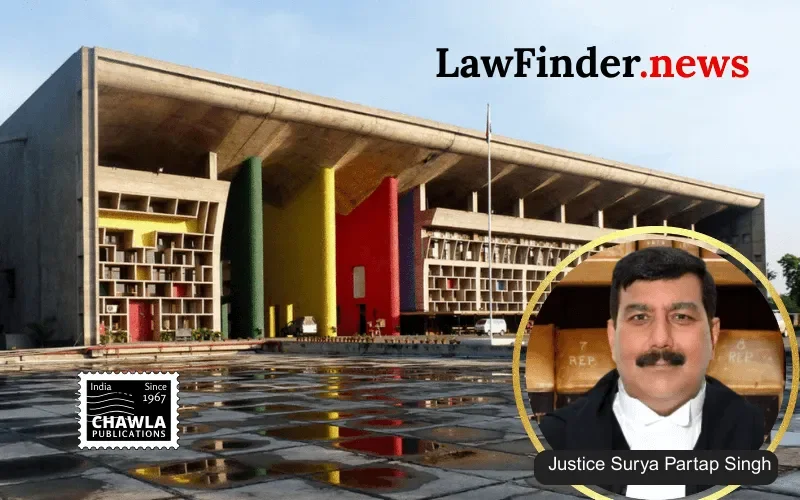
In a significant ruling dated November 5, 2026, the Punjab and Haryana High Court, presided over by Justice Surya Partap Singh, partially allowed an appeal filed by Vikram and another appellant against the sentence awarded for their conviction under Section 25 of the Arms Act, 1959. The appellants were originally sentenced to rigorous imprisonment for one year along with a fine for possession of prohibited arms. However, the Court modified the sentence, releasing the appellants on probation for one year, citing their status as first-time offenders and the protracted nature of the litigation spanning over 23 and a half years.
The case arose from an FIR lodged in December 2002, reporting the apprehension of five young men allegedly armed and preparing for a dacoity. Among them, Vikram and his co-appellant were found in possession of a spring-actuated knife and a country-made pistol, respectively. They were convicted under Section 25 of the Arms Act, which prescribes a minimum sentence of seven years' imprisonment. Despite this, the trial court sentenced them to only one year of rigorous imprisonment, which the appellants challenged, seeking the benefit of probation on appeal.
During the hearing, the appellants did not dispute the conviction but contended that considering their first-offender status, absence of criminal history, and the prolonged trial period, they deserved leniency. The State opposed this, emphasizing the seriousness of the offence and the statutory minimum sentence requirement.
Justice Surya Partap Singh extensively referred to landmark Supreme Court judgments, including Jugal Kishore Prasad v. State of Bihar (1972), Chellammal v. State (2025), Lakhvir Singh v. State of Punjab (2021), and Amit Singh v. State of Rajasthan (2024), which established that the Probation of Offenders Act, 1958, aims to prevent the transformation of youthful or first-time offenders into hardened criminals by promoting correction and rehabilitation rather than retribution. The Court highlighted that even where a minimum sentence is prescribed by law, the benefit of probation can be granted if the circumstances justify such relief.
Analyzing the facts, the Court observed that the appellants had undergone prolonged litigation, had no subsequent criminal record, and were first-time offenders at the time of the incident. These factors weighed heavily in favor of probation. Consequently, the Court modified the sentence to release the appellants on probation of good conduct for one year, subject to furnishing bonds and maintaining peace and good behavior.
This judgment reinforces the principle that the criminal justice system must balance the rule of law with humane considerations of reformation and social reintegration, particularly for first-time offenders. It also clarifies that statutory minimum sentences are not absolute bars to probation if justifiable on facts and legal precedents.
Bottom Line:
Benefit of probation can be granted to an offender even in cases where a minimum sentence is prescribed, provided the circumstances of the case justify such relief.
Statutory provision(s):
Section 25 of Arms Act, 1959; Section 4 of Probation of Offenders Act, 1958; Section 360 of Code of Criminal Procedure, 1973; Section 361 of Code of Criminal Procedure, 1973
Vikram v. State of Haryana, (Punjab And Haryana) : Law Finder Doc Id # 3019189