Apex court says High Court exceeded supervisory limits under Article 227 and held that members seeking impleadment must show necessity, not mere association with the society
The Supreme Court has set aside Calcutta High Court orders that had stayed a trial court’s interim arrangement for managing Sri Guru Sangha, a charitable society based in Kolkata, and had also overturned the trial court’s refusal to implead certain applicants in the pending suit.
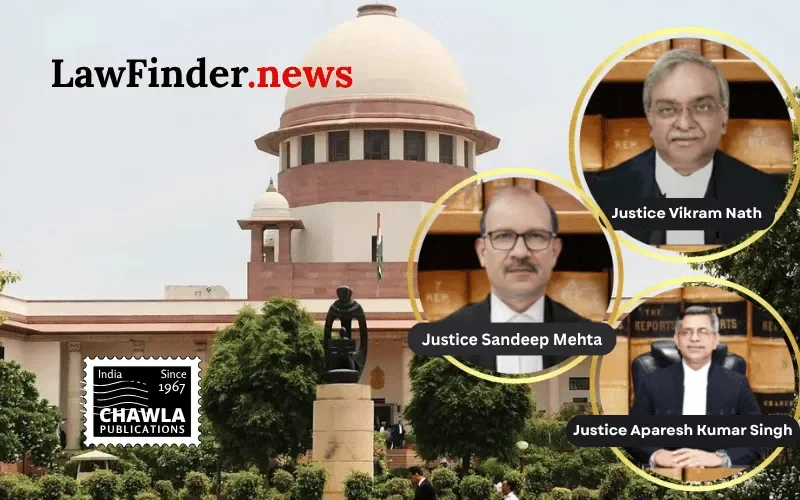
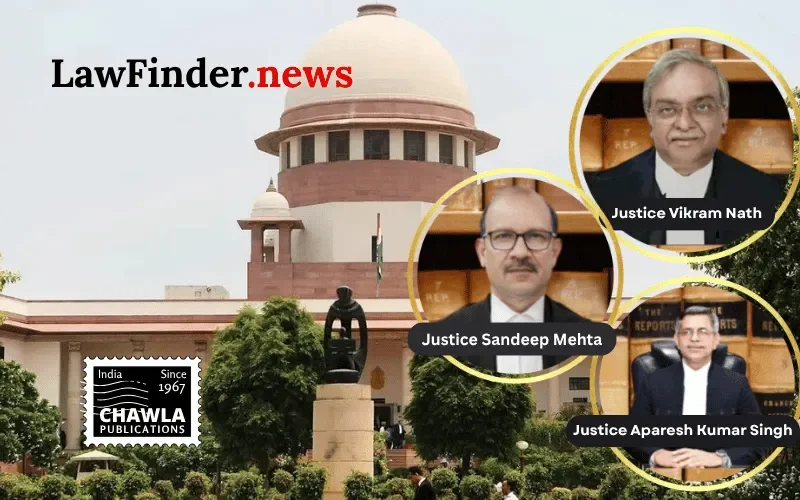
A Bench of Justices Vikram Nath, Sandeep Mehta and Aparesh Kumar Singh held that the trial court was fully competent to make interim arrangements for the administration and protection of the Sangha during the pendency of the suit. The Court said there was no justification for the High Court to interfere with the trial court’s order appointing and later removing a Special Officer, and then constituting a 13-member ad hoc committee to run the society.
The dispute arose from Title Suit No. 105 of 2012, filed under Section 92 of the Code of Civil Procedure, seeking, among other reliefs, removal of office bearers, framing of a management scheme and appointment of a receiver. During the suit, the trial court first appointed a Special Officer and later replaced her with an ad hoc committee after allegations of irregularities and non-compliance surfaced. The High Court, however, stayed that arrangement in September 2022.
The Supreme Court found that the Special Officer had been asked to explain the allegations and that her written response had been considered before removal. It observed that the trial court’s decision was based on the loss of confidence in the Special Officer and on the need to ensure proper functioning of the institution. The Court held that the High Court, exercising jurisdiction under Article 227, could not substitute its own view in the absence of a patent jurisdictional error, perversity or grave miscarriage of justice.
Citing its earlier ruling in M/s Garment Craft v. Prakash Chand Goel, the Court reiterated that supervisory jurisdiction is limited and is not meant to correct every factual or legal error. On that basis, it restored the trial court’s order dated 07.06.2022.
The Court also dealt with impleadment applications filed by certain members of the Sangha. The trial court had rejected their request, holding that they had not shown sufficient grounds to be added as parties. The High Court later set aside that rejection, noting that the suit was representative in nature and that the interests of others could be affected.
The Supreme Court disagreed, holding that a representative suit under Section 92 CPC does not automatically entitle every devotee or member to be impleaded. It said applicants must satisfy Order I Rule 10(2) CPC by showing that their presence is necessary or proper for effective adjudication. Mere allegations of collusion or mismanagement, without specific particulars, were not enough. The Court therefore restored the trial court’s order rejecting impleadment.
The Bench also noted subsequent allegations about the functioning and finances of the ad hoc committee, but declined to issue fresh directions or appoint a new administrator. It said such grievances could be raised before the trial court, which remains competent to examine them independently and pass appropriate orders.
Accordingly, the Supreme Court allowed all the appeals, set aside the High Court’s interim interference, and directed that the trial court continue with the suit and related applications in accordance with law.
Statutory provision(s): Section 92, Code of Civil Procedure, 1908; Order I Rule 10(2), Code of Civil Procedure, 1908; Article 227, Constitution of India
Subhasindu Das v. Bacchu Ranjan Das, (SC) : Law Finder Doc id # 3201901